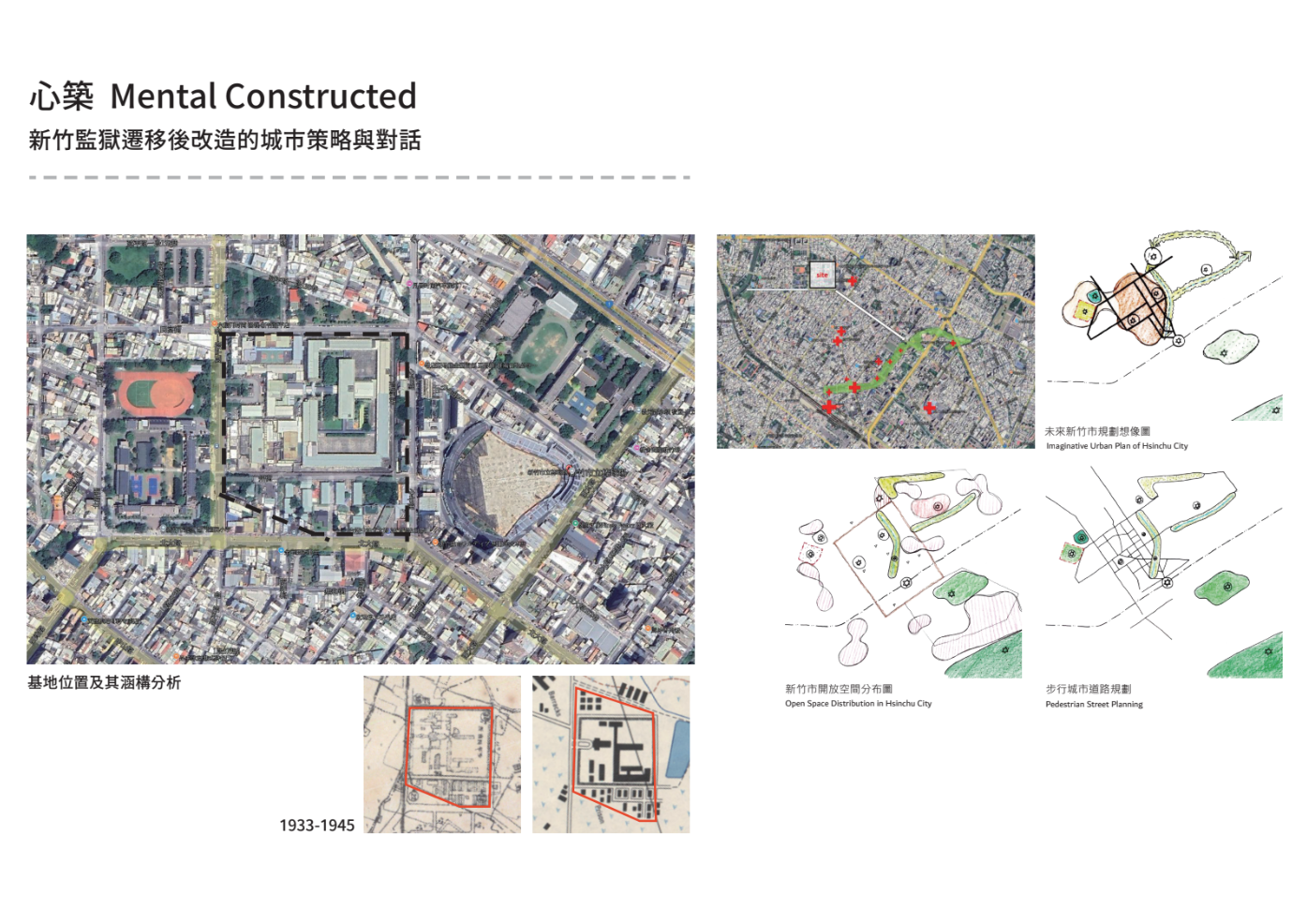
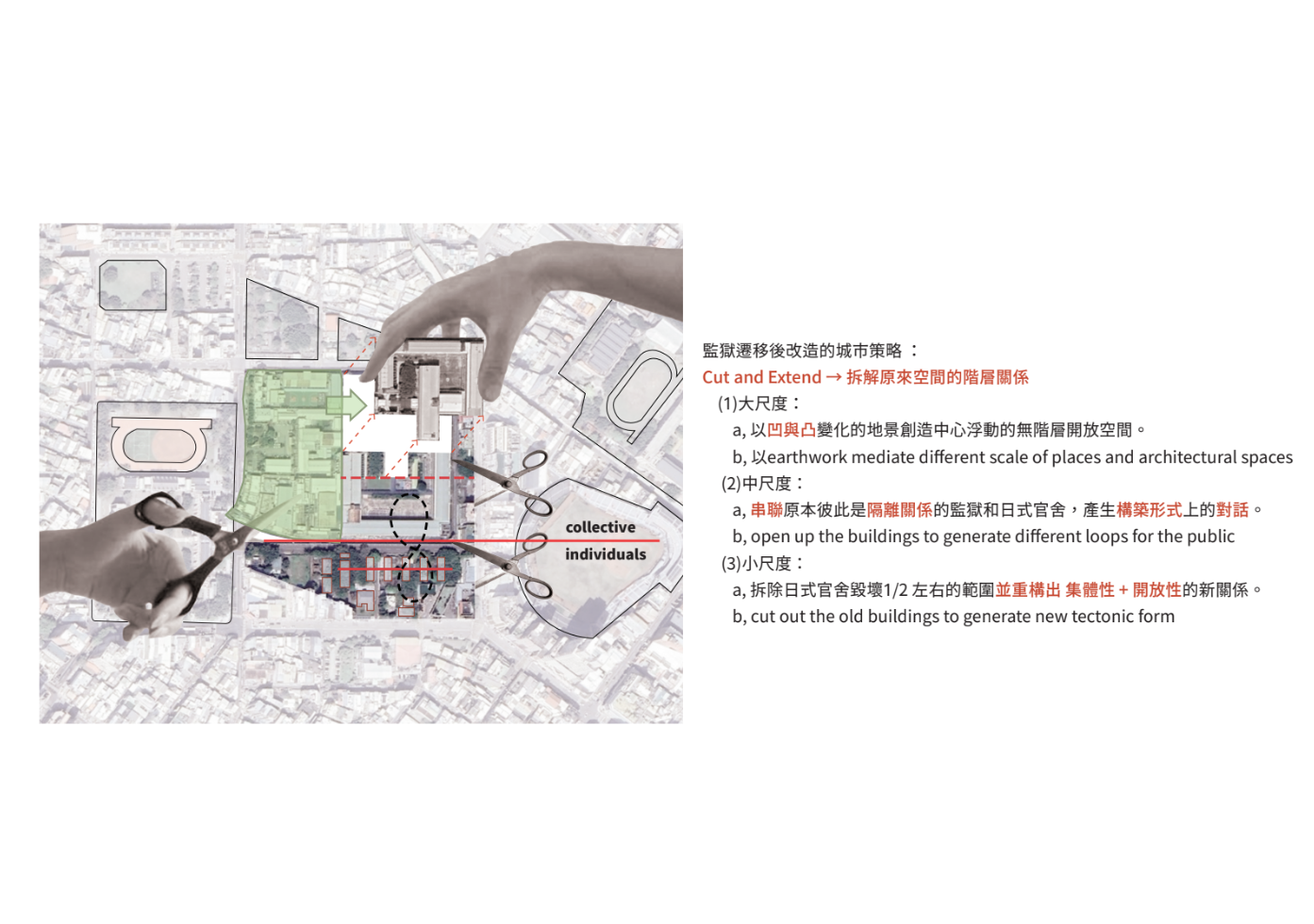
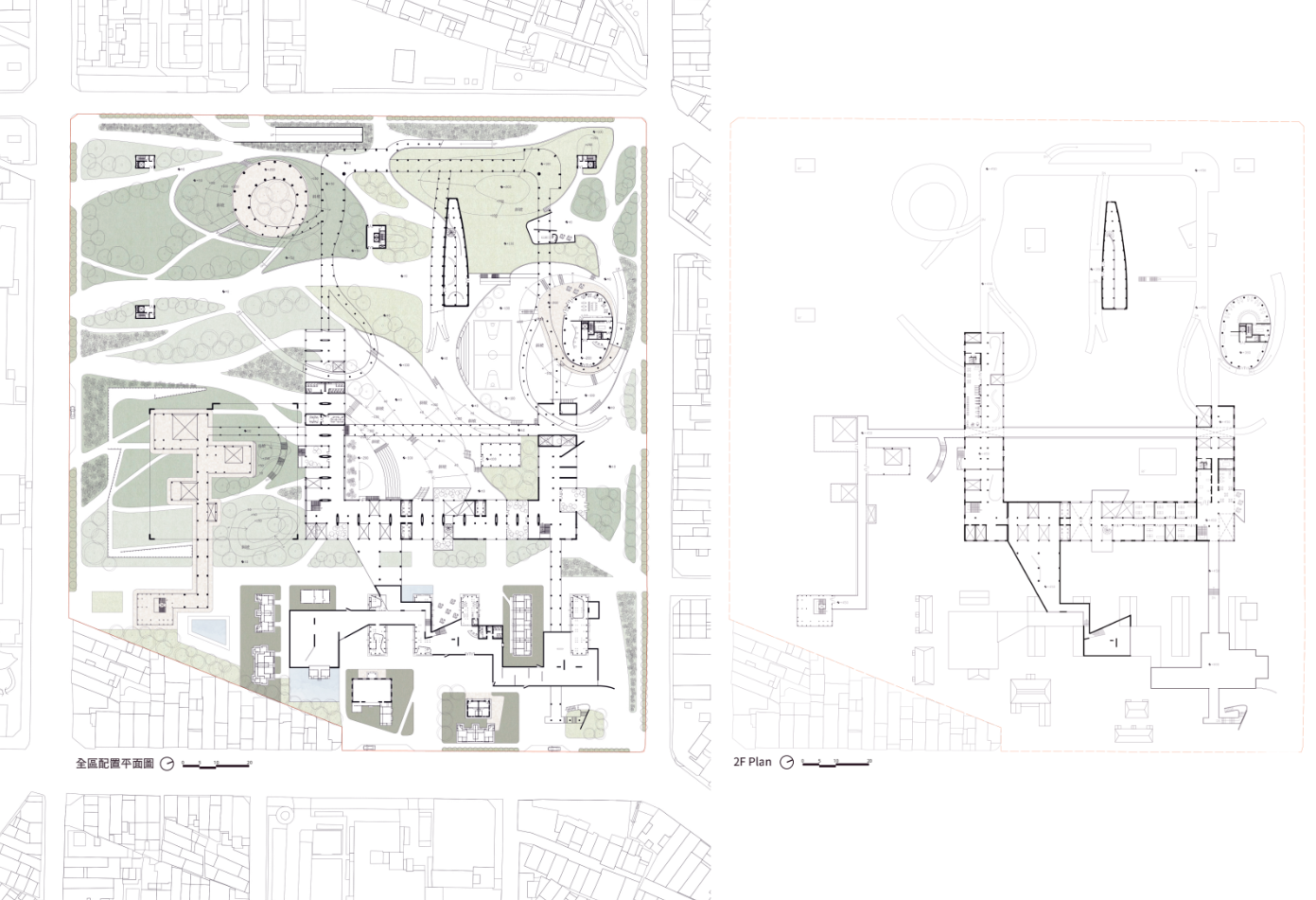
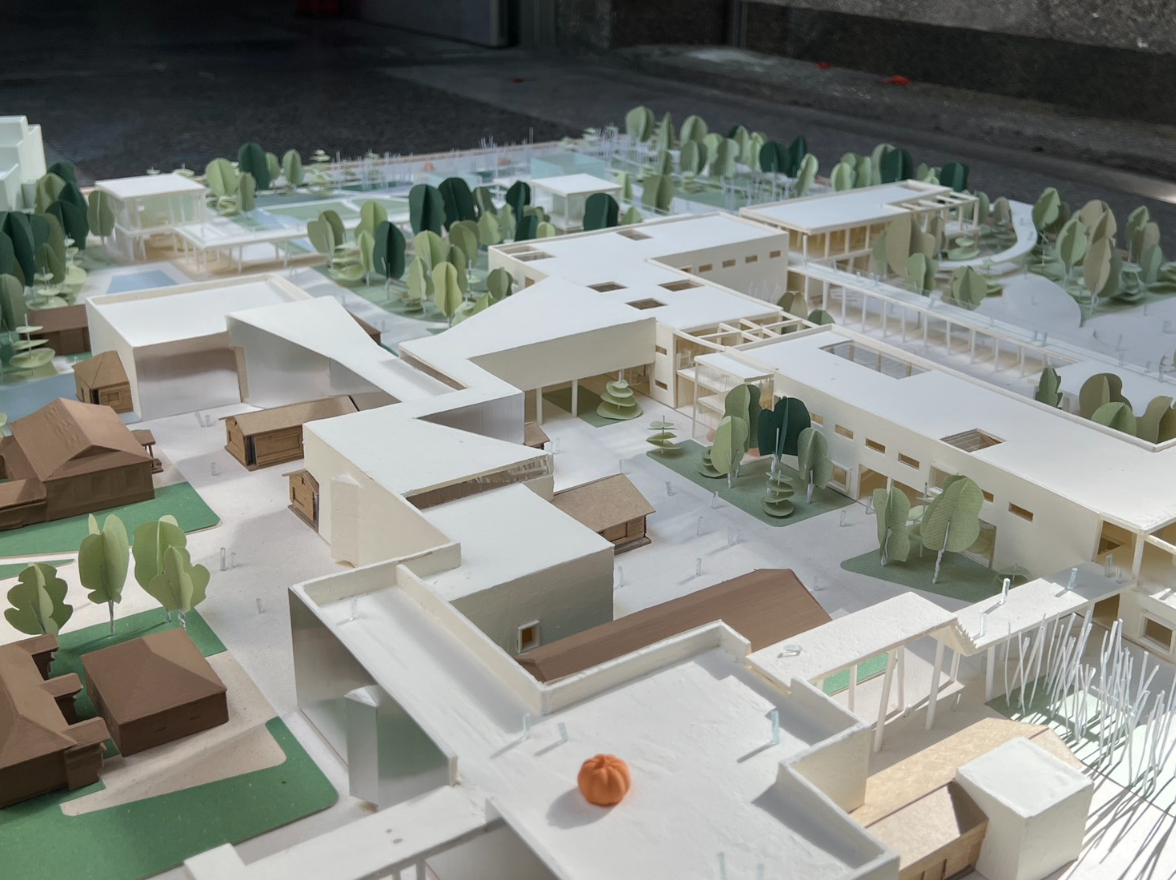
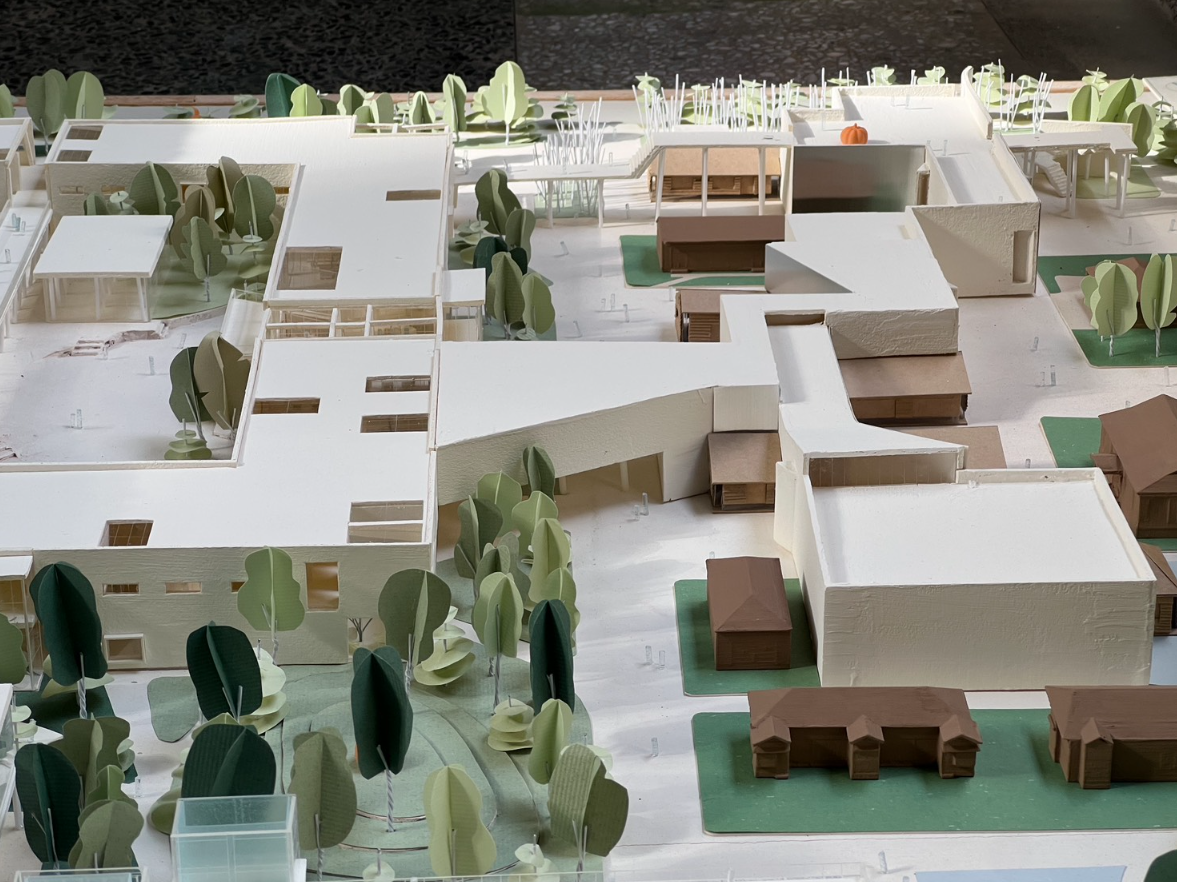
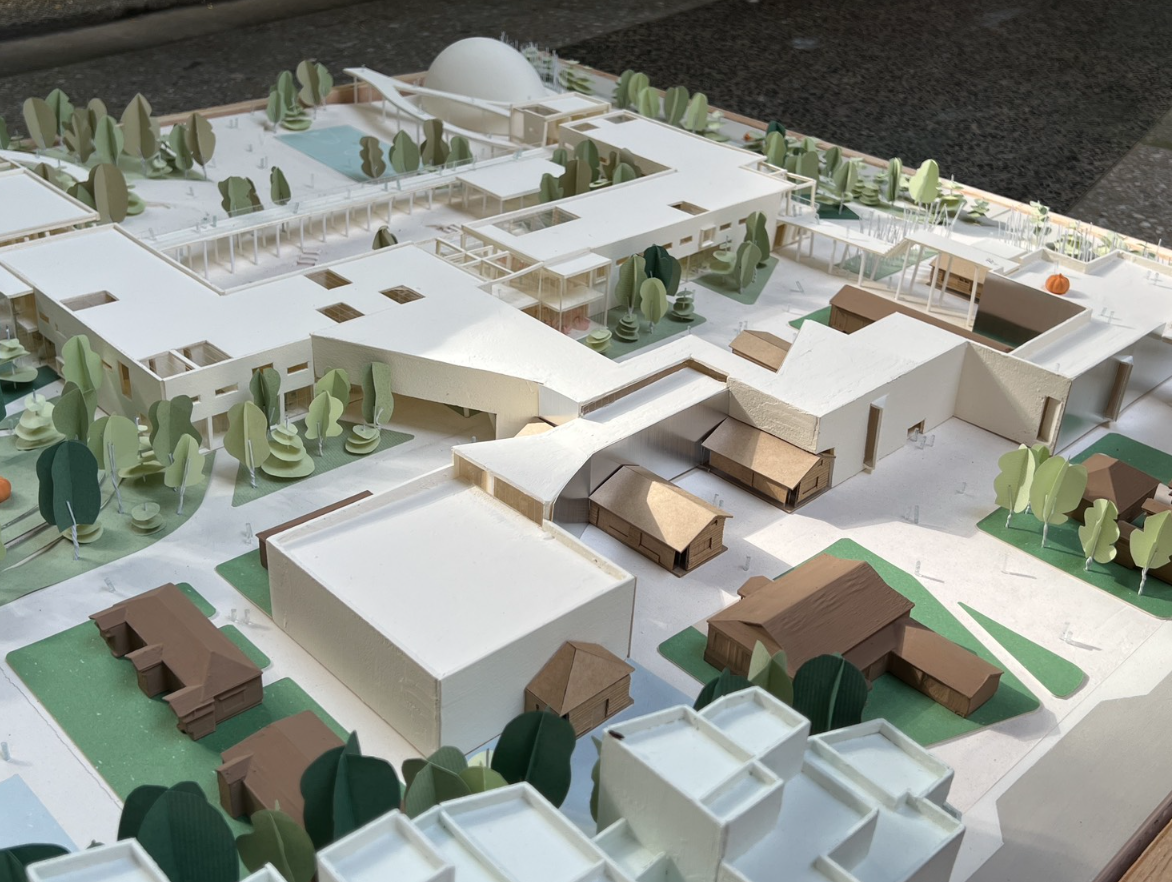
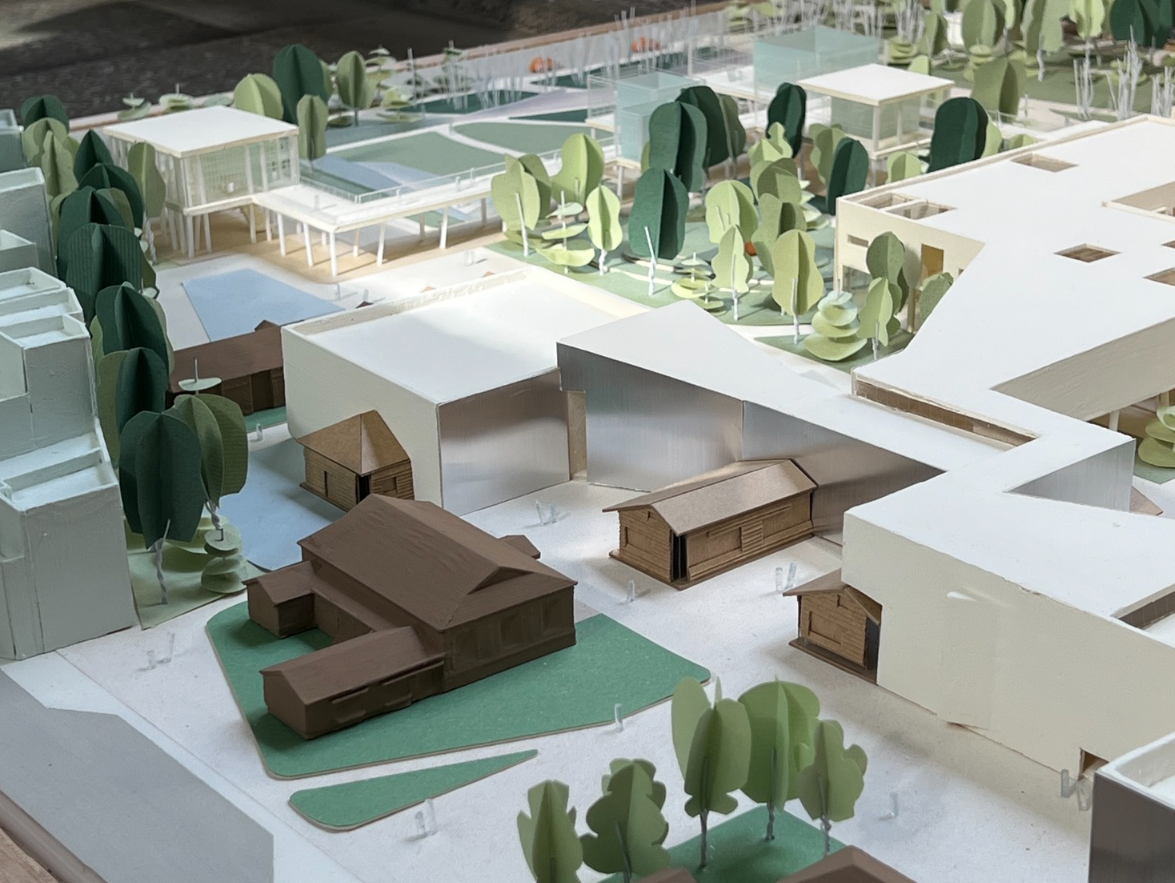
心築》以監獄遷移後的城市再生成為契機,透過「Cut and Extend」的策略,拆解原有空間中的階層結構,讓歷史場域從封閉走向開放,重新回到城市日常與公共記憶中。
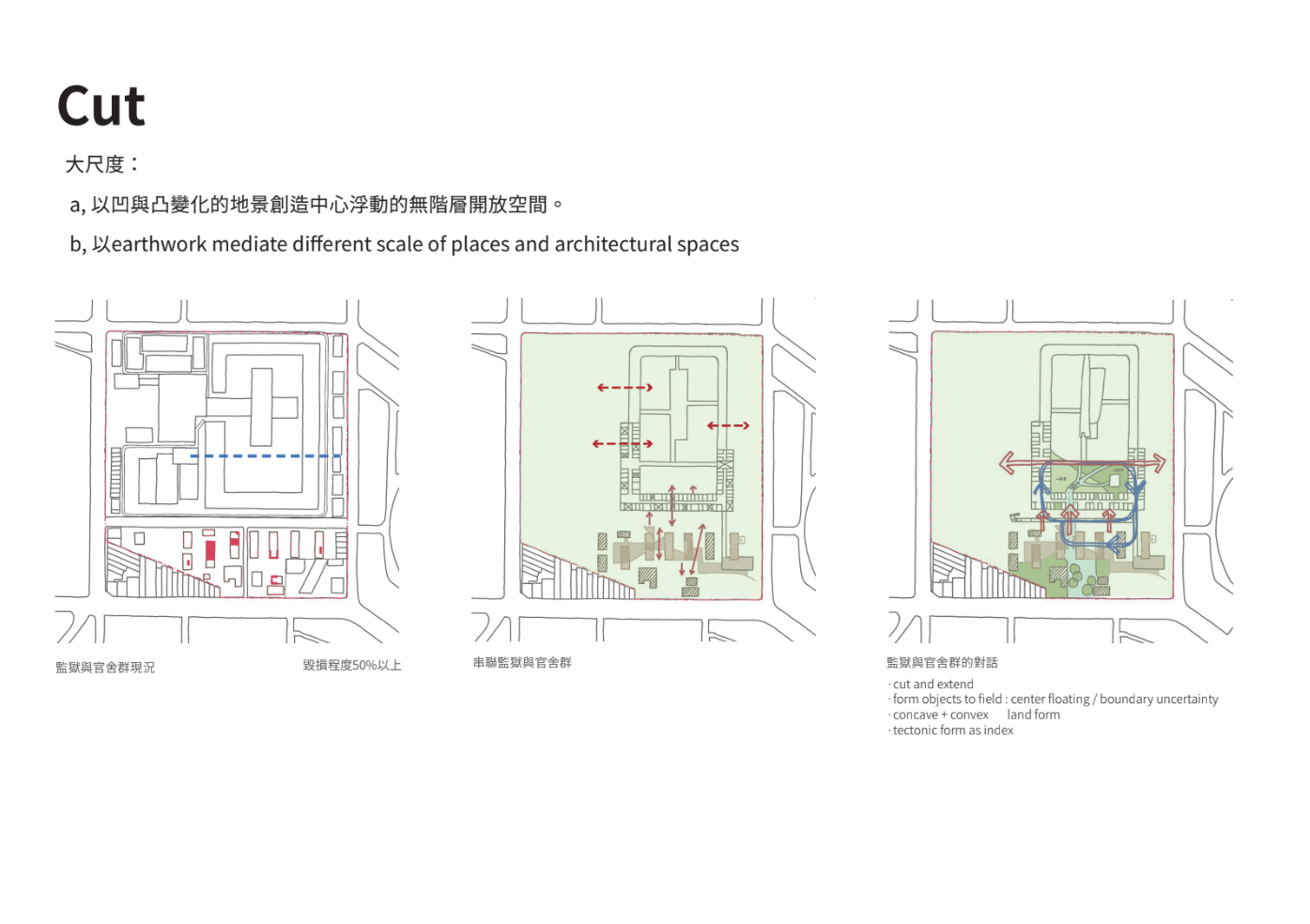
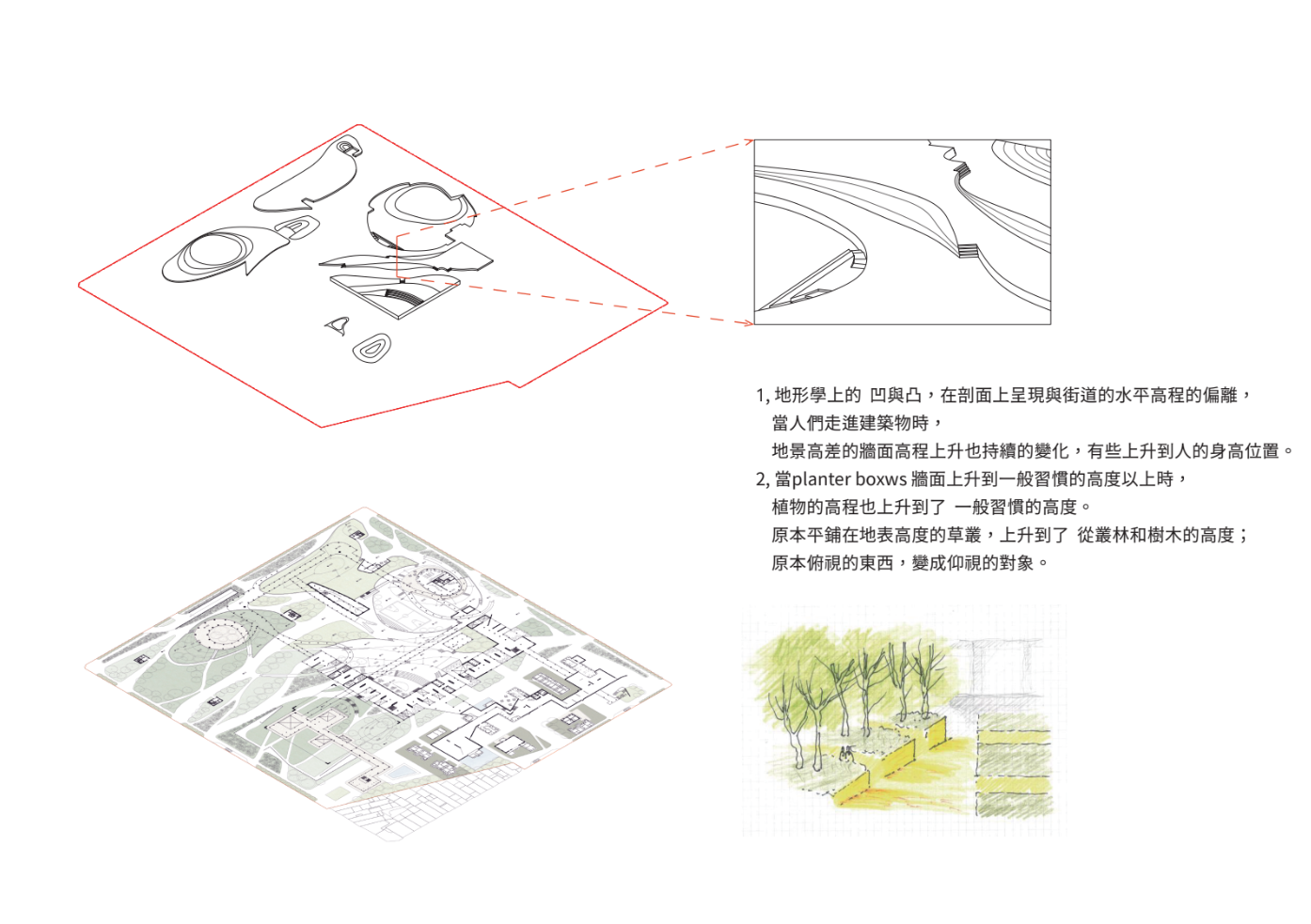
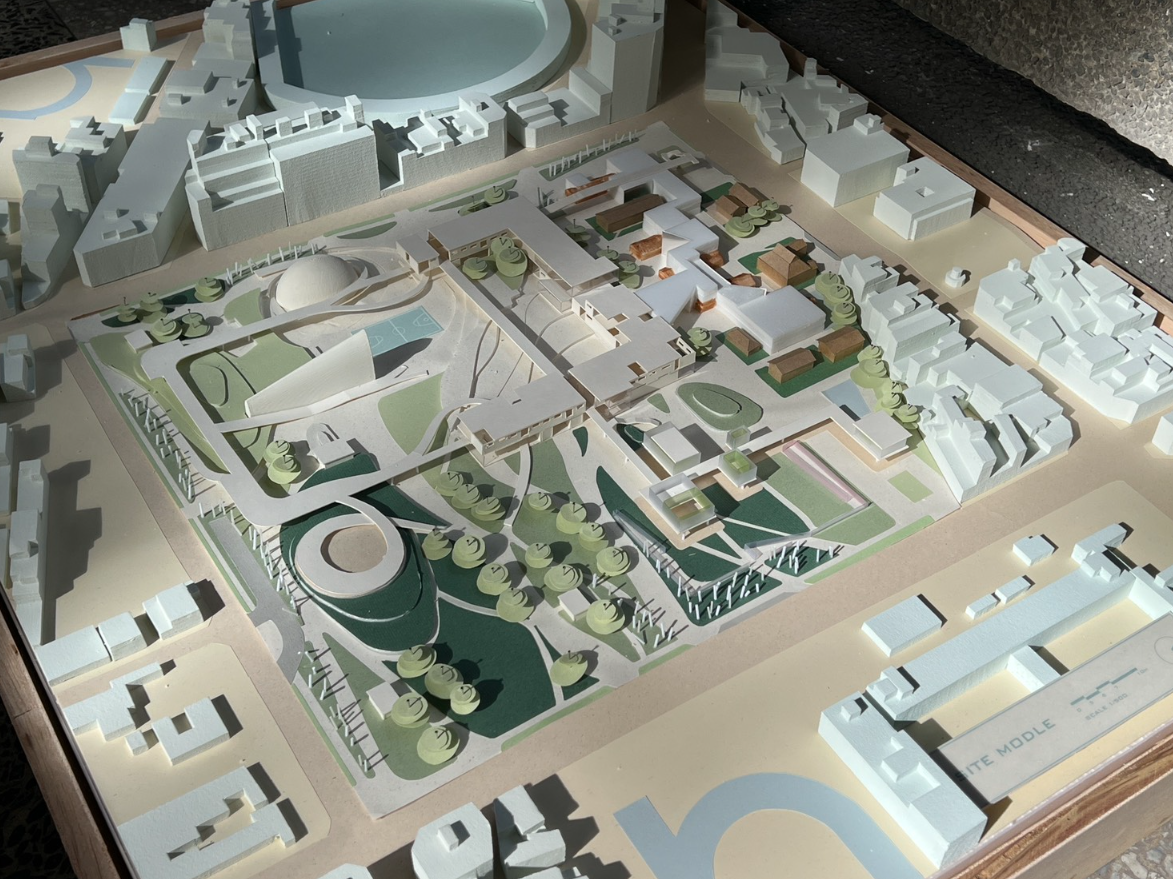
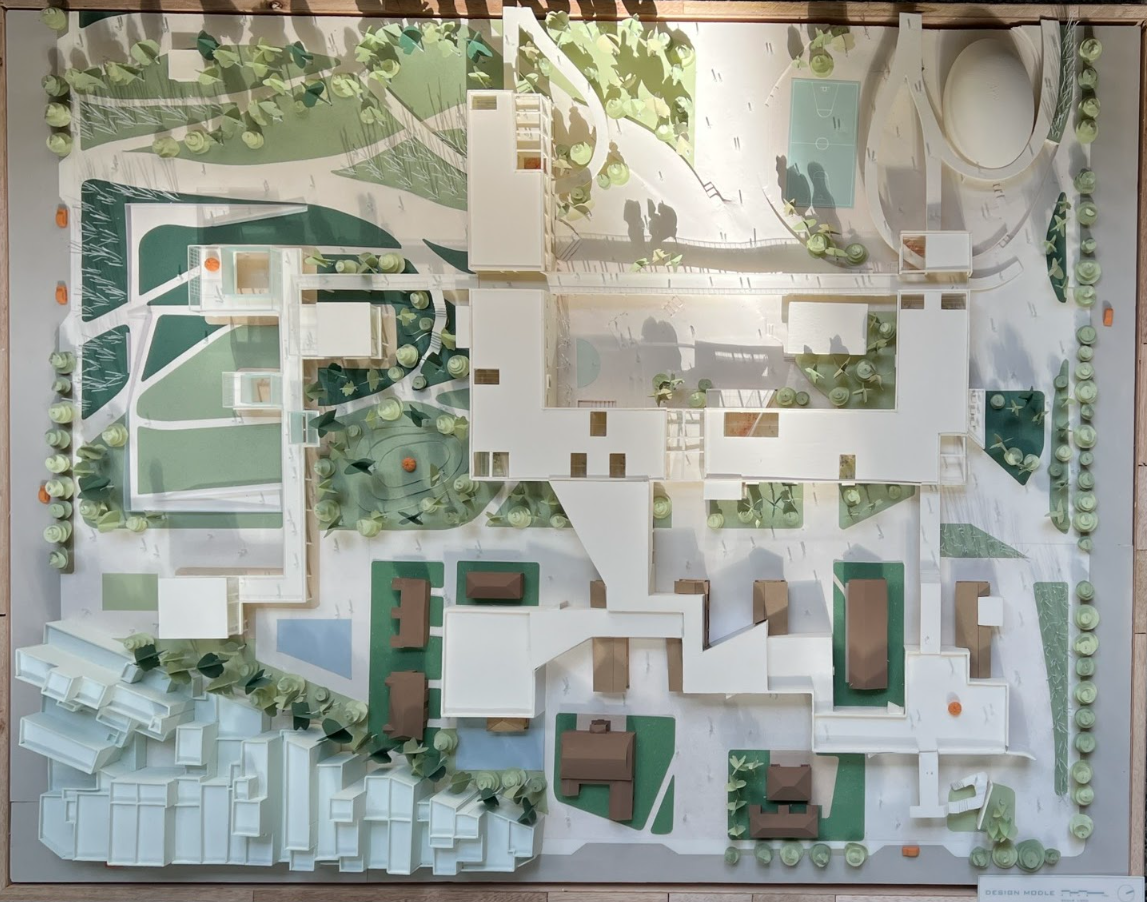
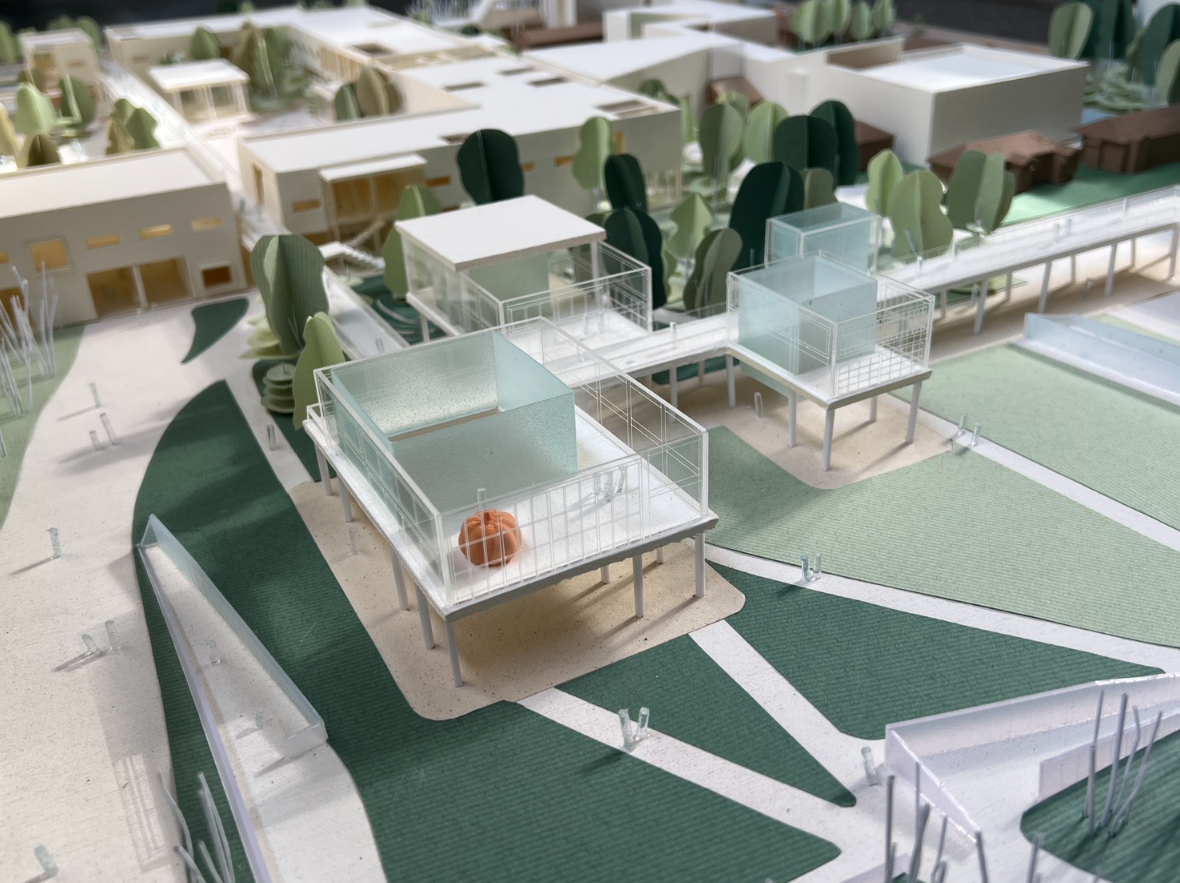
在大尺度上,透過凹凸地景操作與 earthwork,調和監獄與官舍的尺度落差,並創造無中心的開放場域。當地形抬升至視線高度,草地轉化為可仰視的植被,觀看位置的轉變亦象徵空間權力的重構。
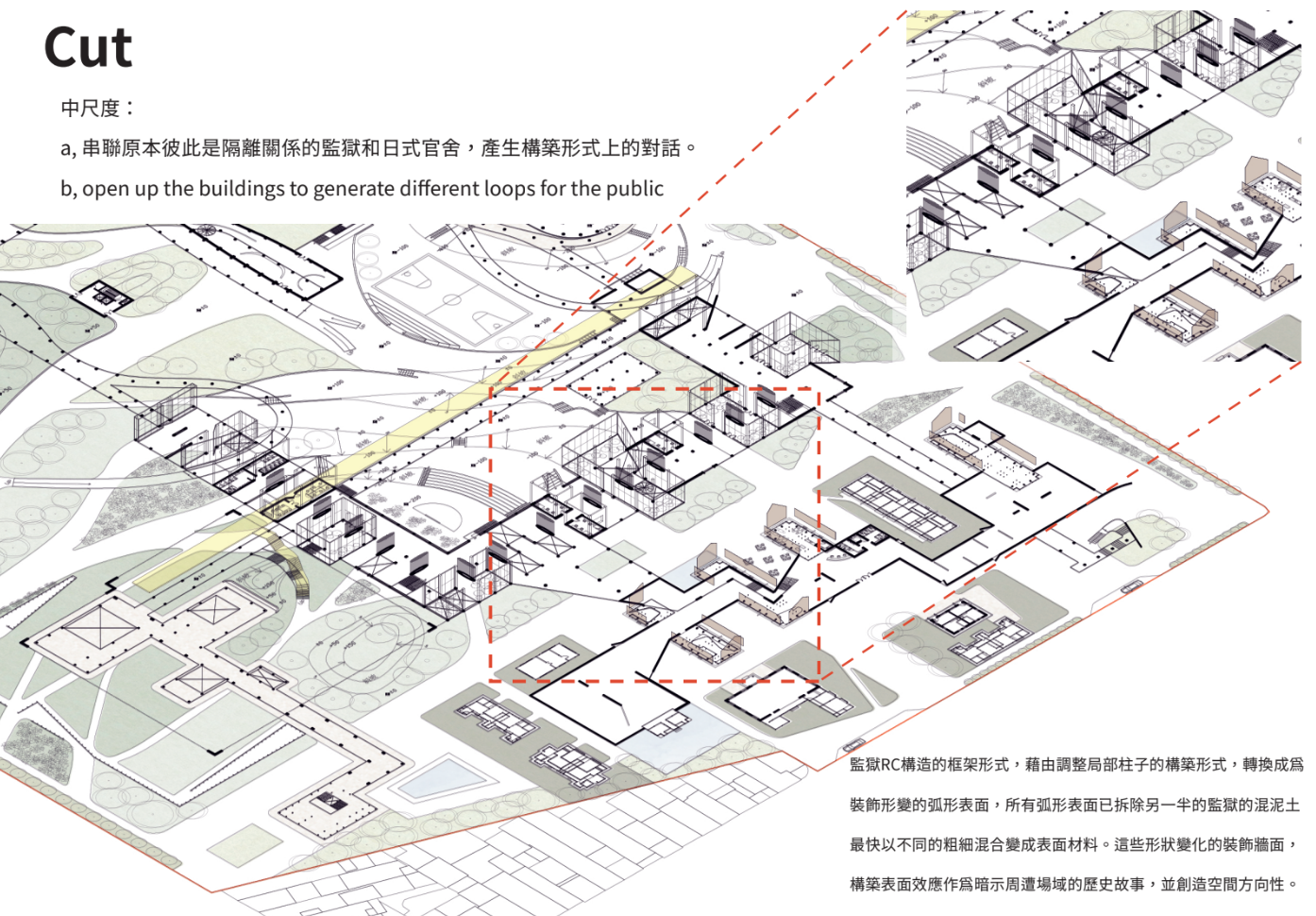
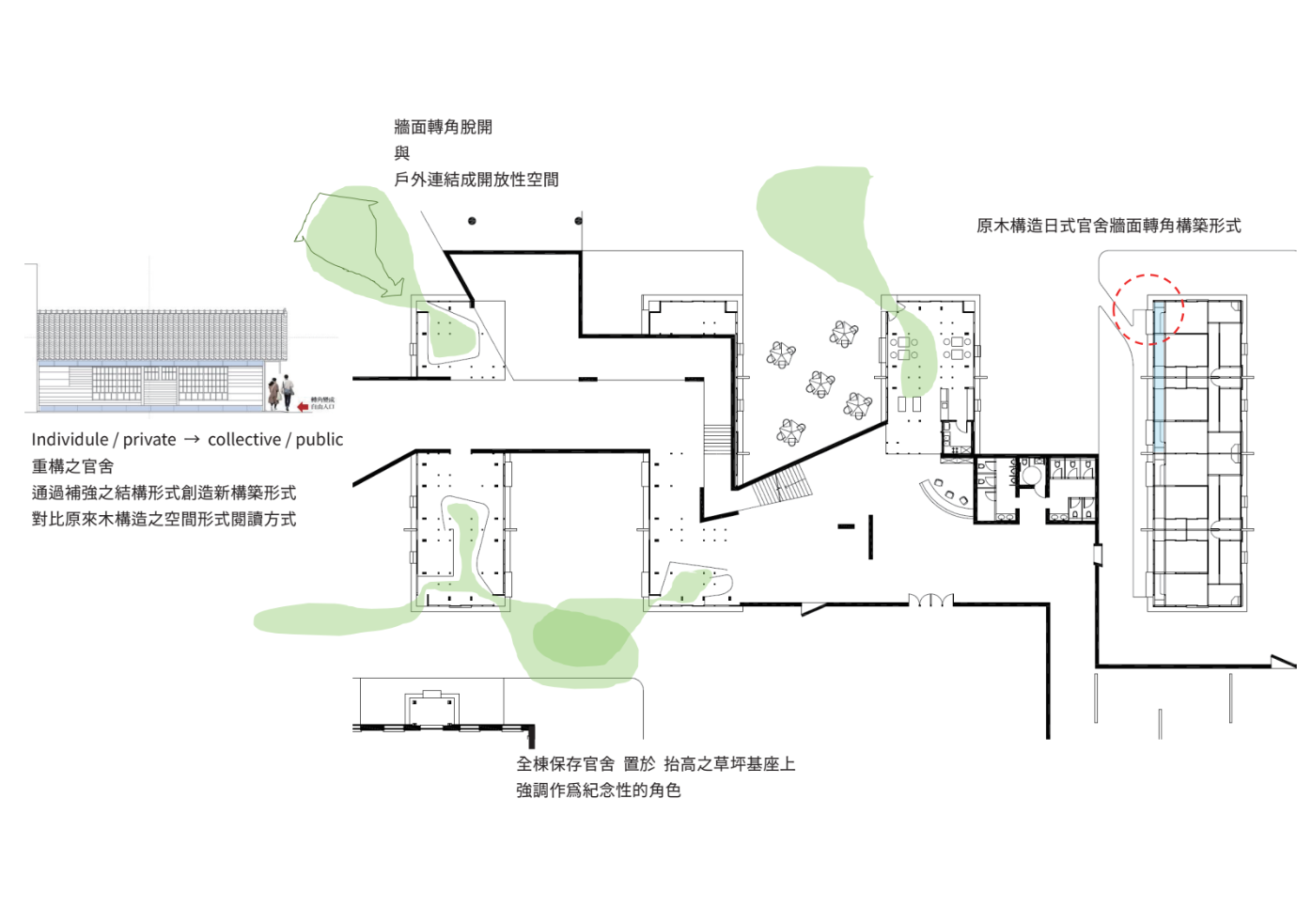
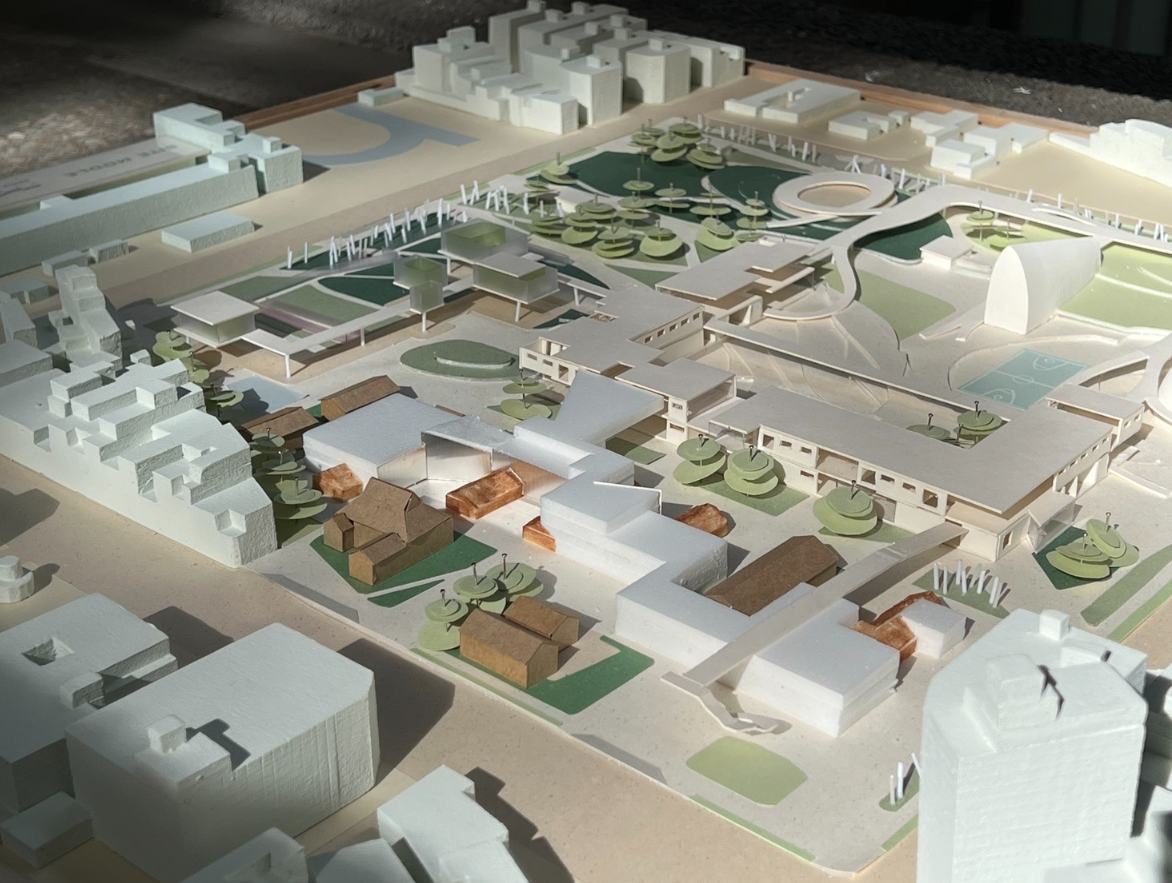
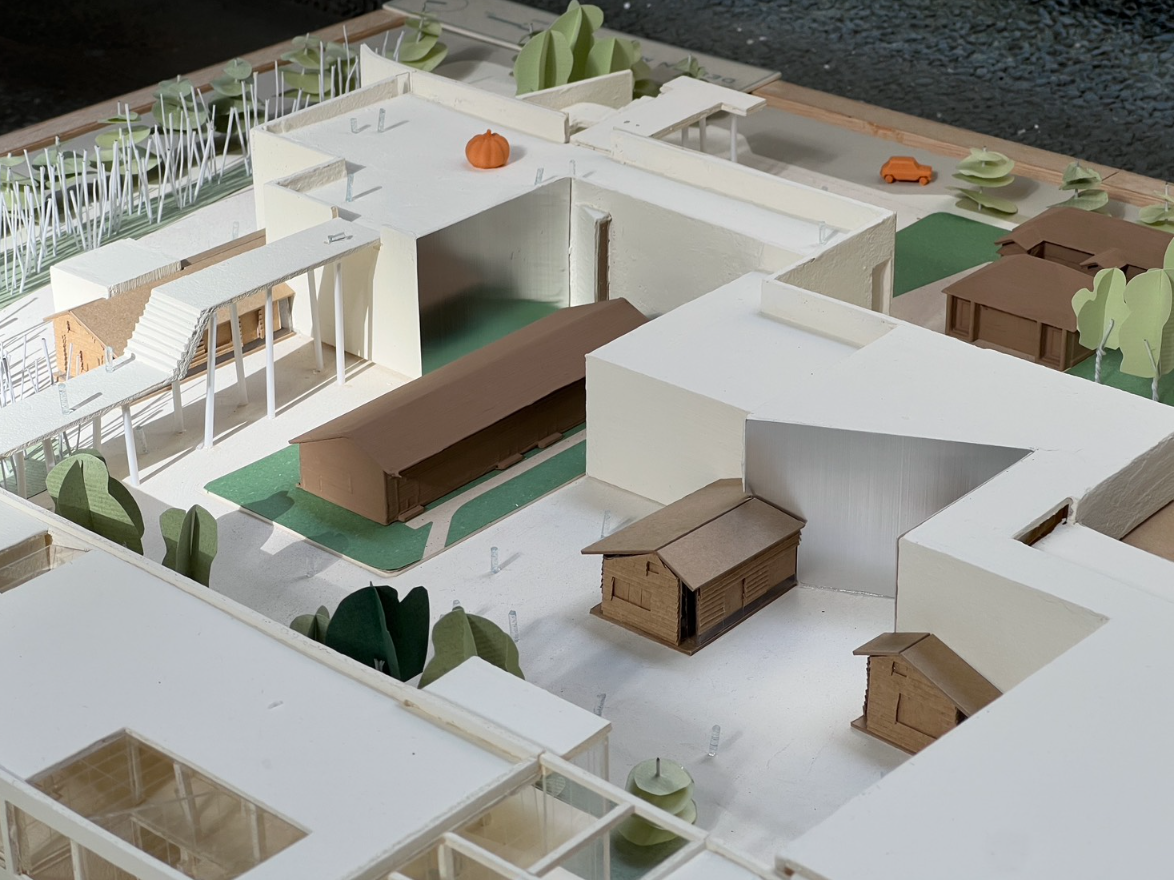
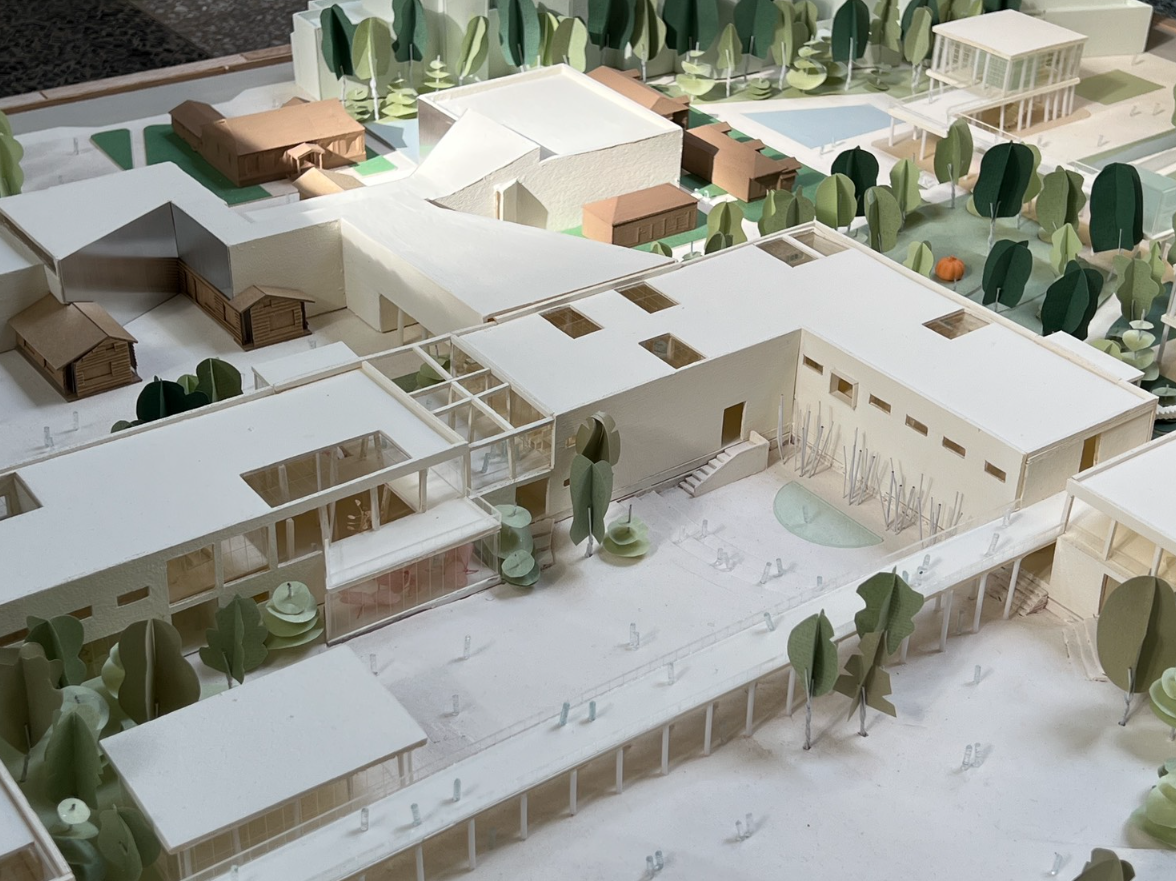
中尺度上,設計打開舊有建築,串聯原本隔離的監獄與日式官舍,導入自由穿梭的動線,形塑公共空間中流動的路徑與停留節點,促成空間語彙的對話與延續。
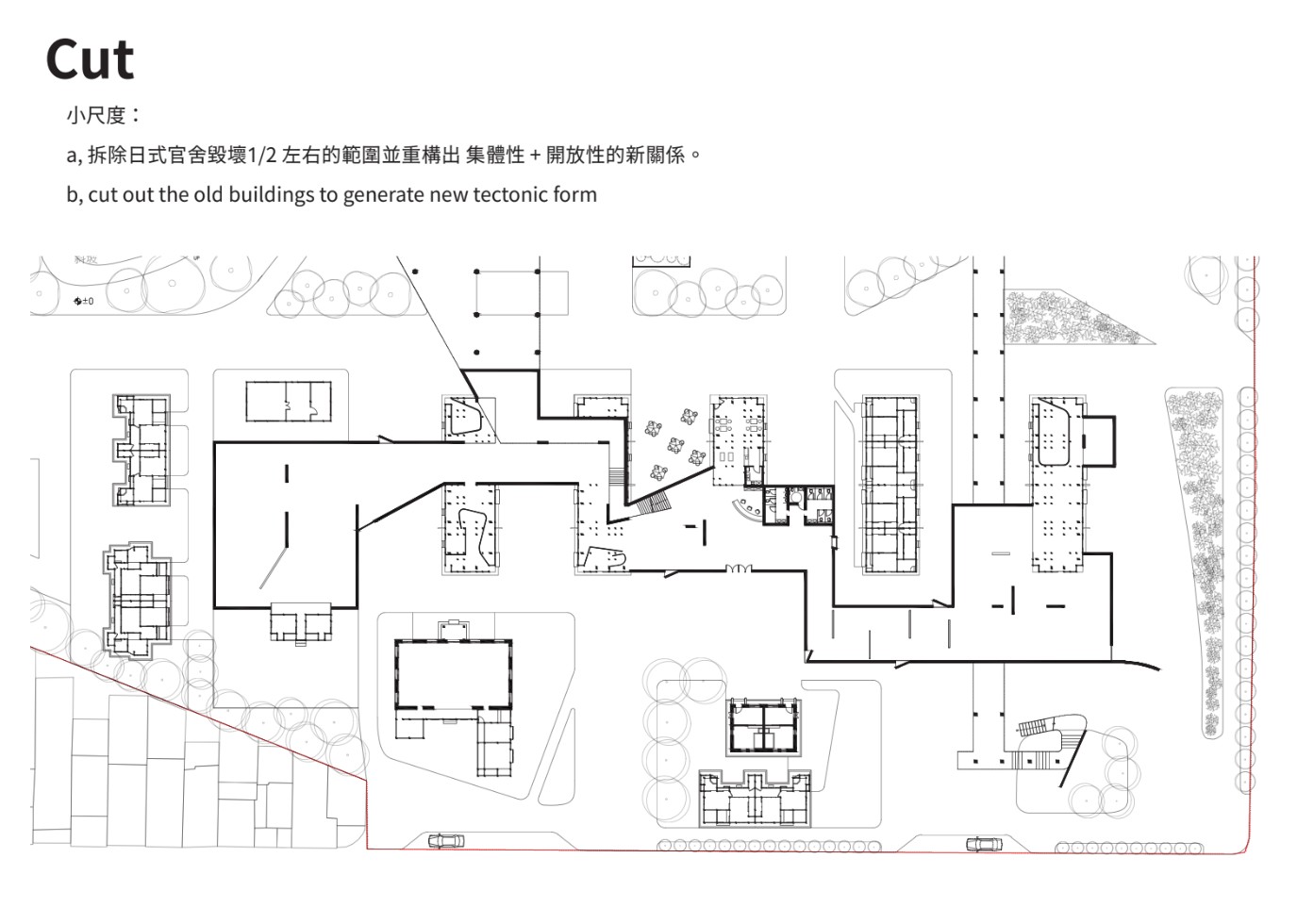
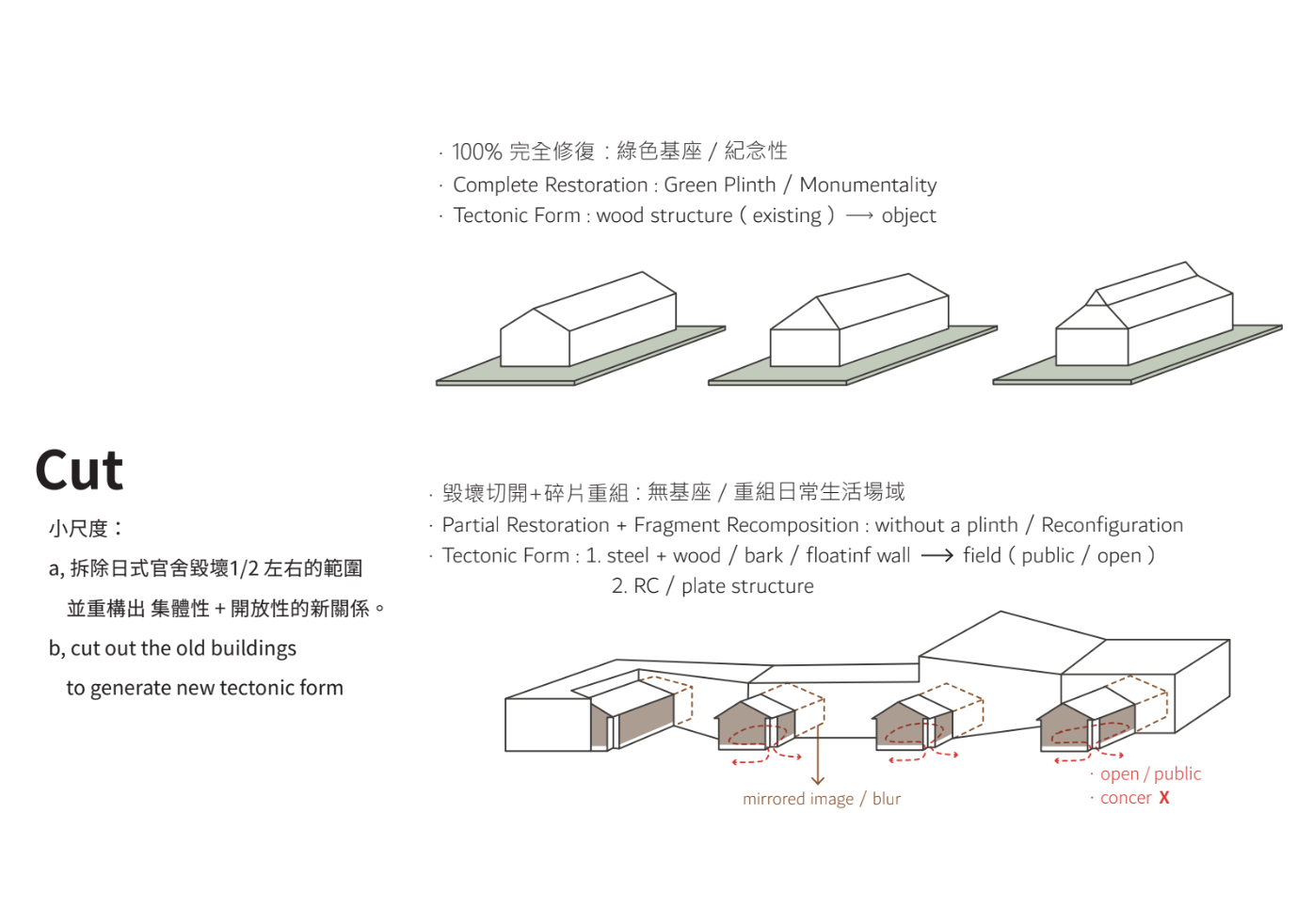
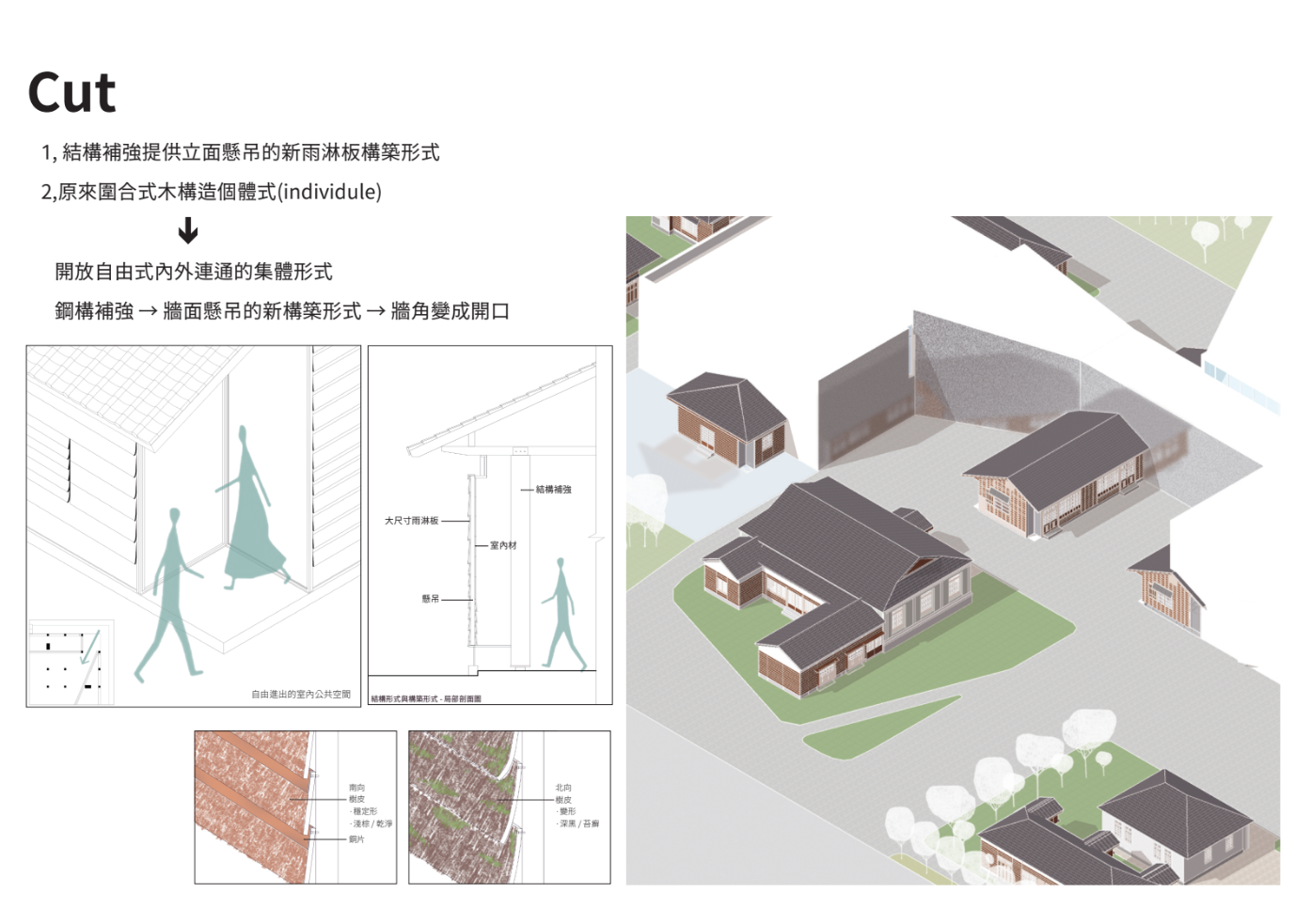
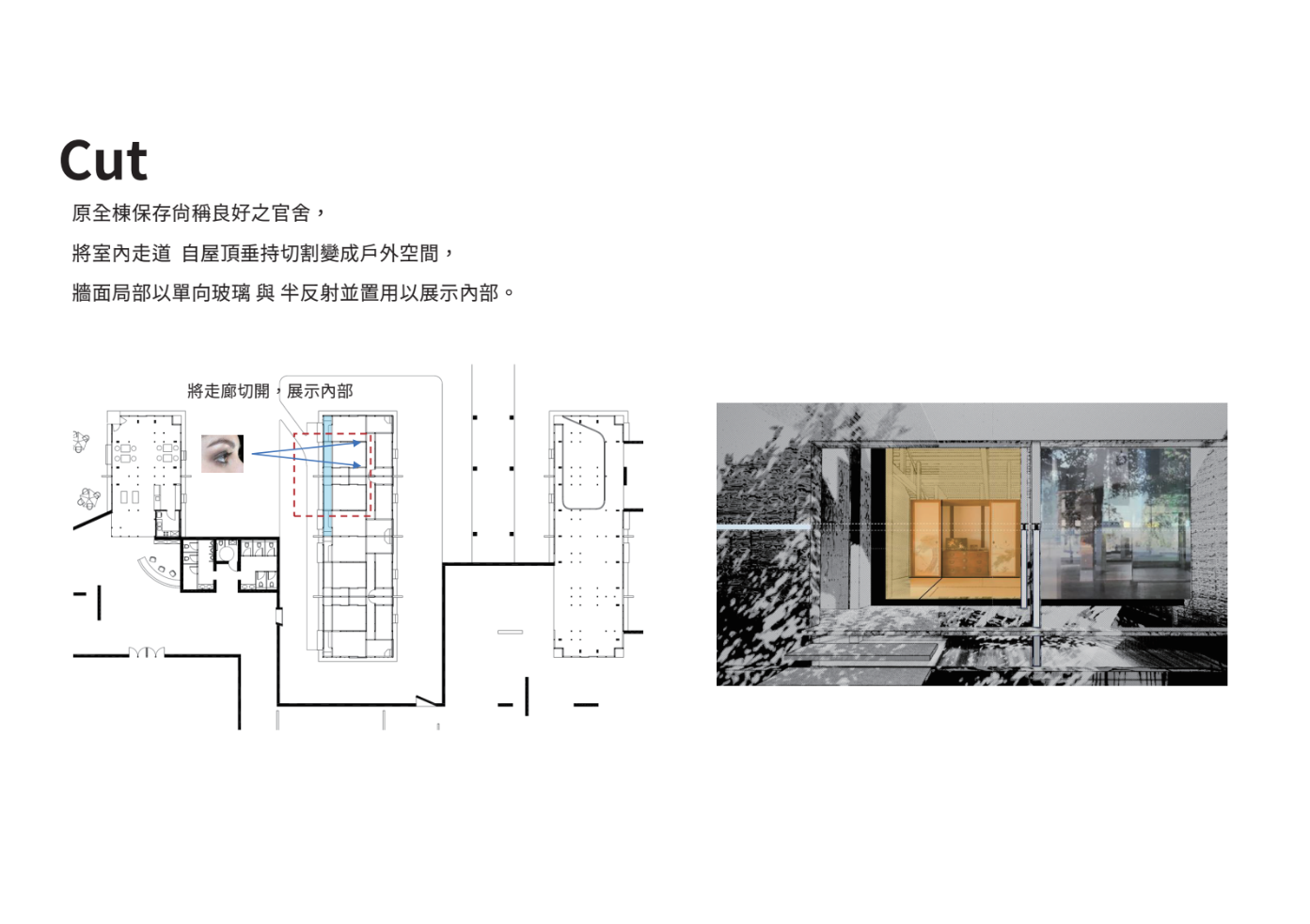
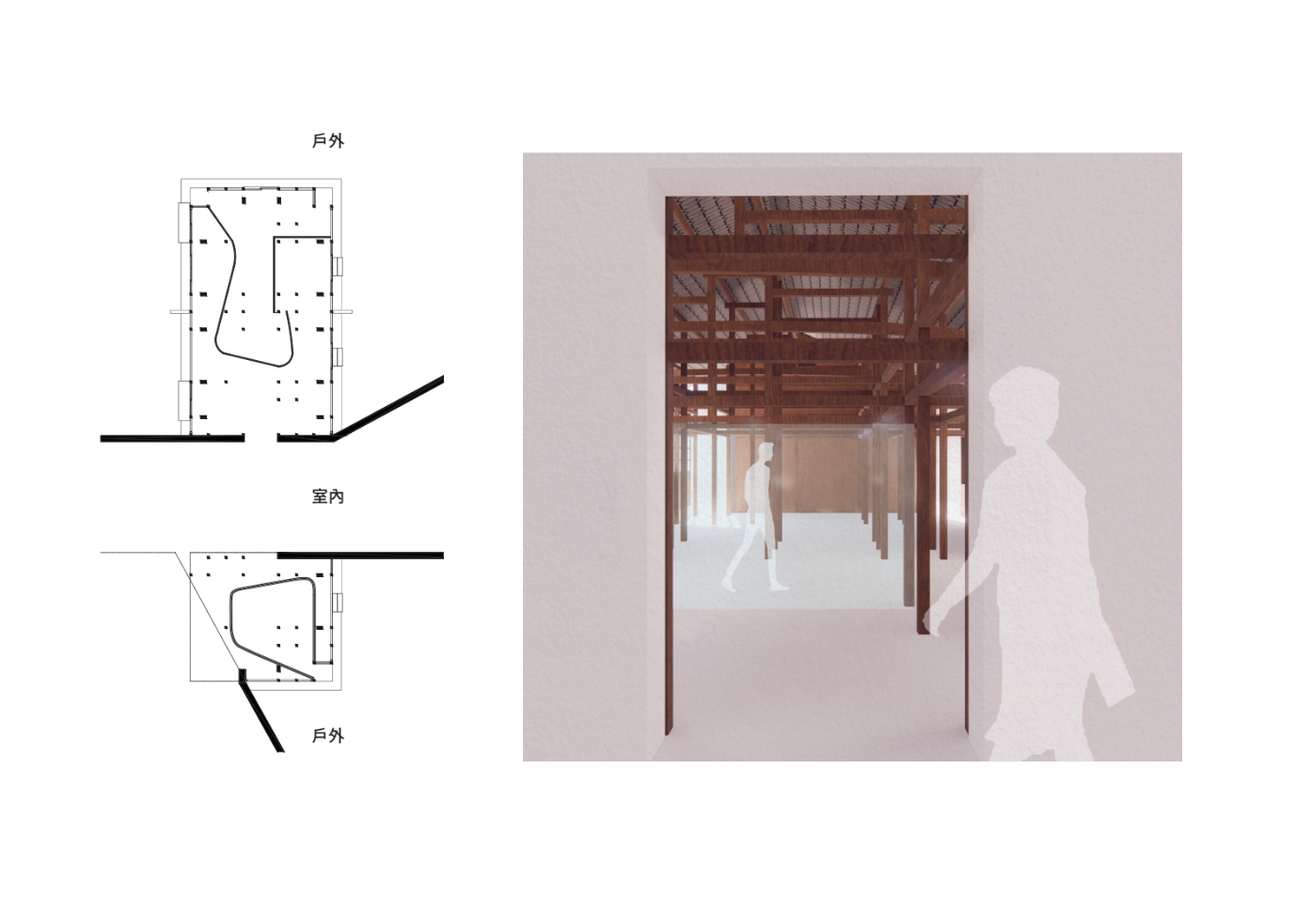
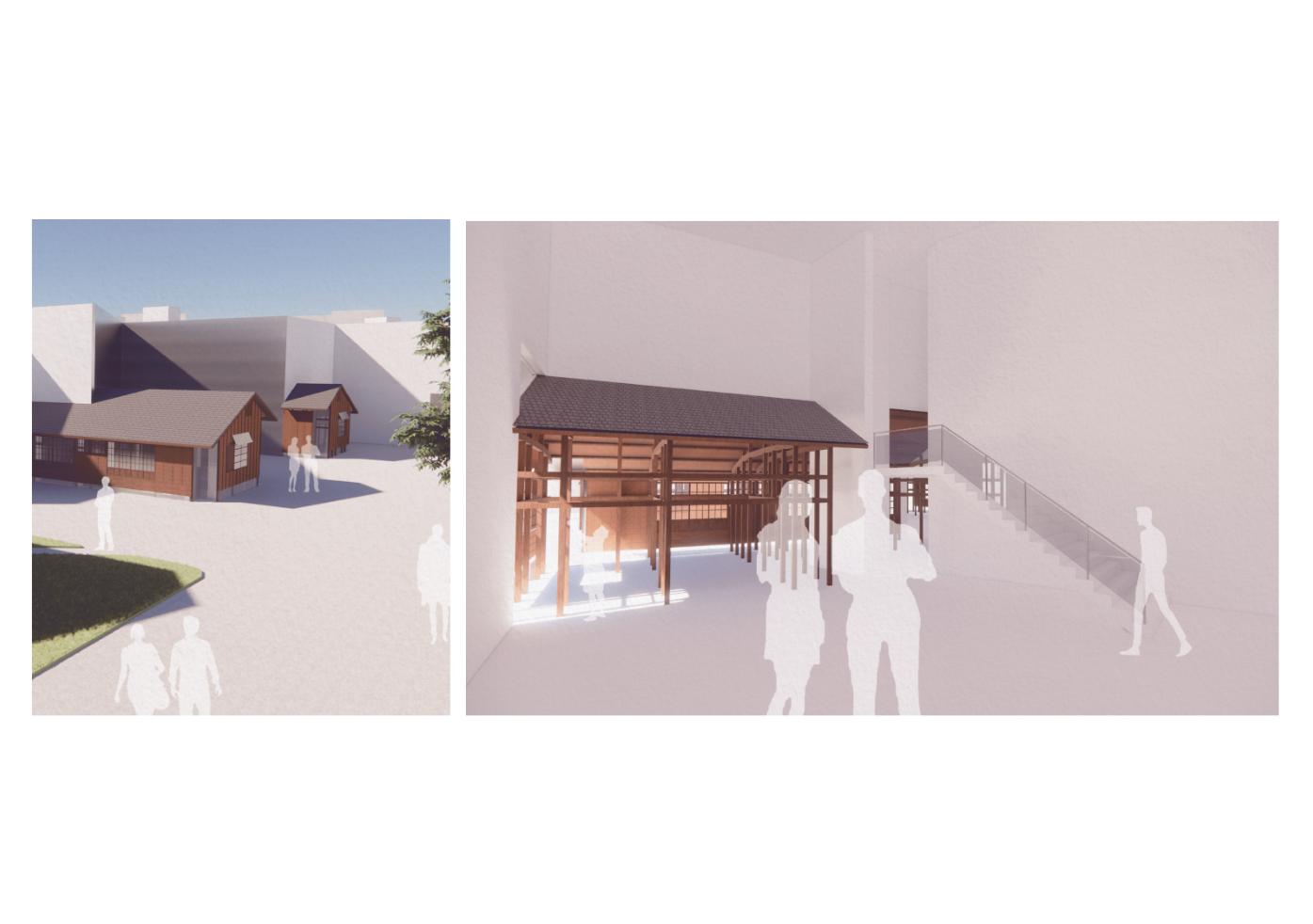
小尺度則透過拆除毀損空間、保留具價值構造,鋼構補強並懸吊牆面,創造新的構築形式,並且打開空間讓重構官舍成為集體共享的場域。保存良好的官舍將原封閉走道轉化為半戶外通廊,構築形式是牆面切開之後的操作,以半反射玻璃介入,使空間成為可被觀看、參與、再詮釋的載體。
透過多尺度的轉譯與構築形式的策略,我希望《心築》成為一處讓記憶與當代共構的詩意場域,使被遺忘的空間重新被閱讀與感知。
–
Reweaving Memory — Xinzhu
Xinzhu explores urban regeneration following the relocation of a prison. Using a “Cut and Extend” strategy, the project dismantles hierarchical spatial systems to transform the once-enclosed historical site into an open, collective memory space embedded in daily urban life.
At the large scale, earthwork and sculpted terrain reconcile the scale gap between the prison and surrounding official residences, forming a decentralized, open landscape. As the ground rises to eye level, grass becomes elevated greenery—shifting viewpoints and symbolizing a reconfiguration of spatial power.
At the medium scale, existing structures are opened up to connect the previously segregated prison and Japanese-style residences. Circulation is redefined through flowing paths and rest nodes, fostering spatial dialogue and continuity.
At the small scale, damaged structures are removed, while valuable elements are preserved and reinforced with steel. Suspended walls and inserted reflective glass reinterpret former enclosures, creating semi-open corridors and shared public zones that invite participation, observation, and reinterpretation.
Through multi-scalar interventions and constructive strategies, Xinzhu becomes a poetic site where memory and the present co-exist—reviving forgotten spaces through new readings and sensorial encounters.