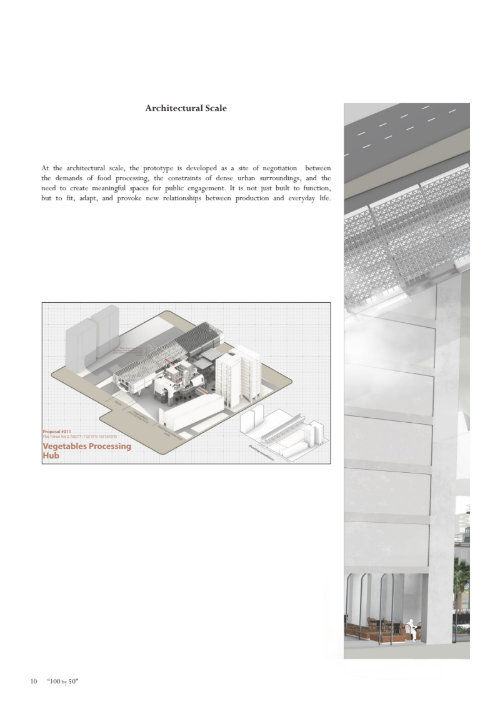
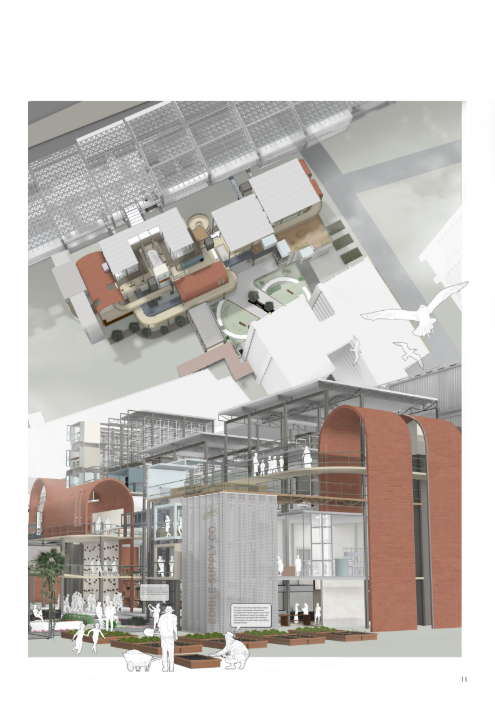
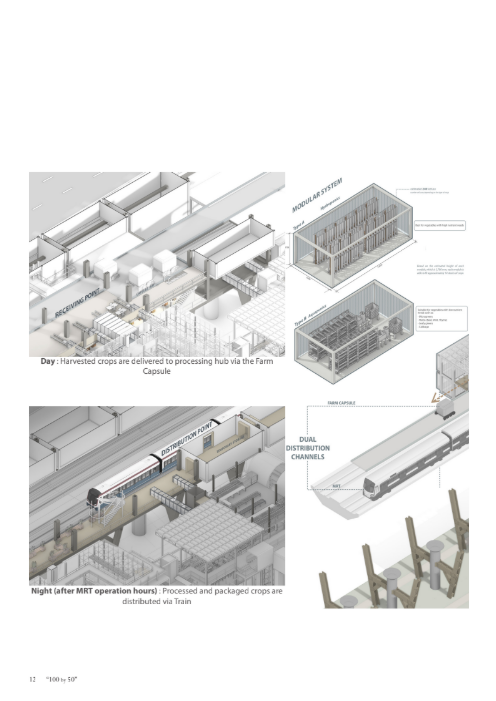
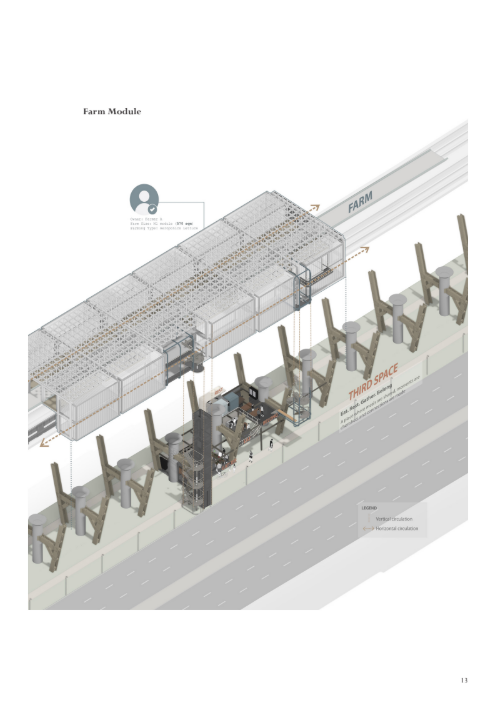
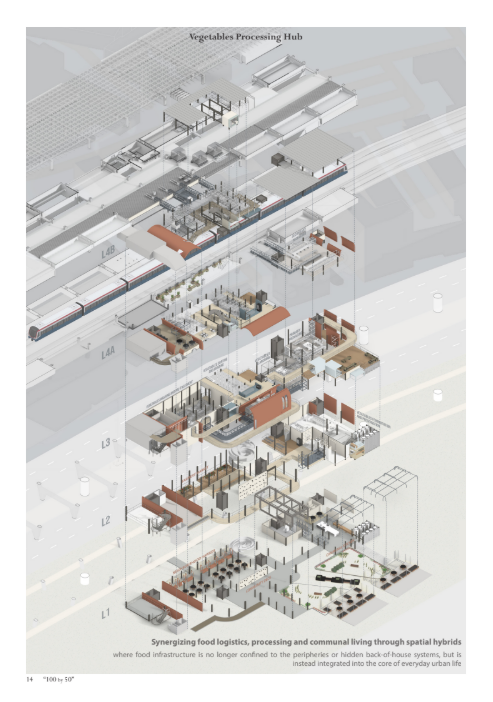
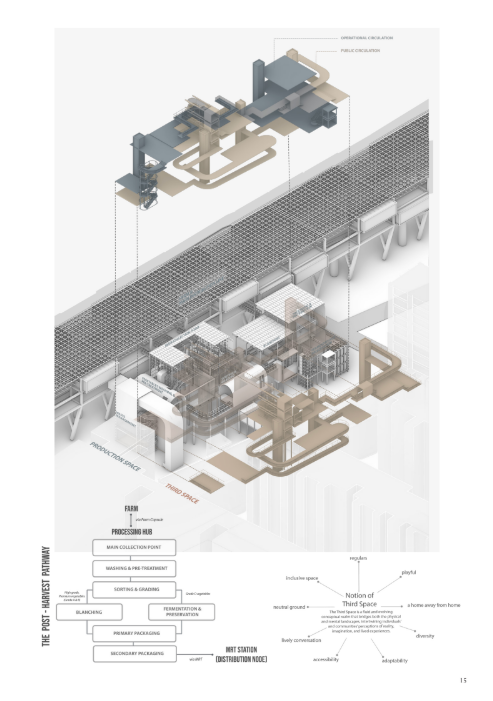
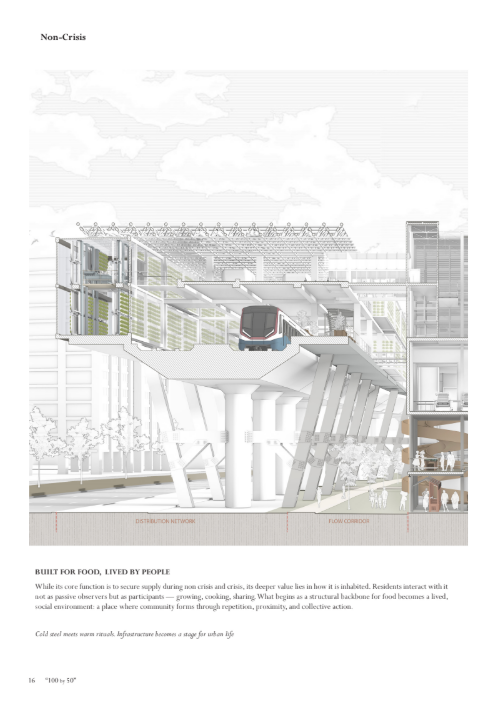
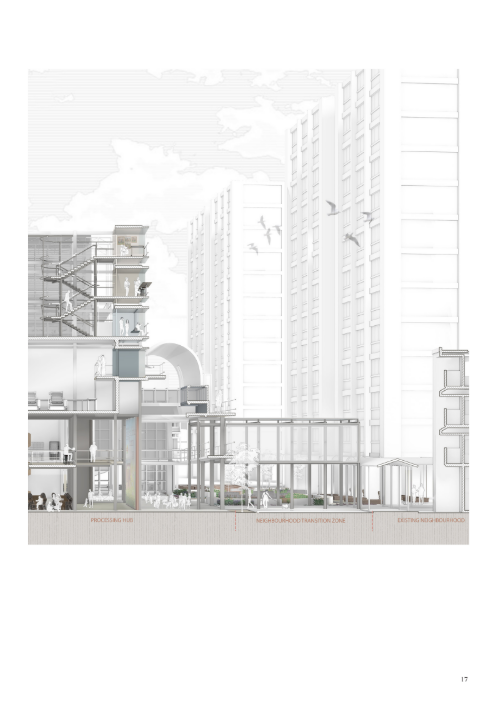
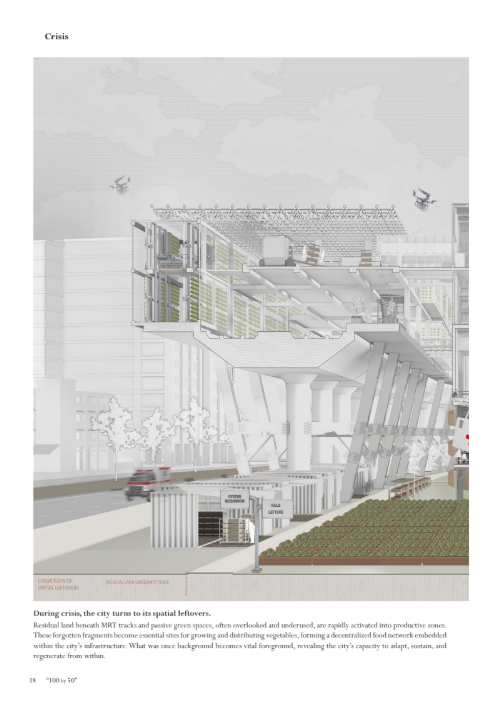
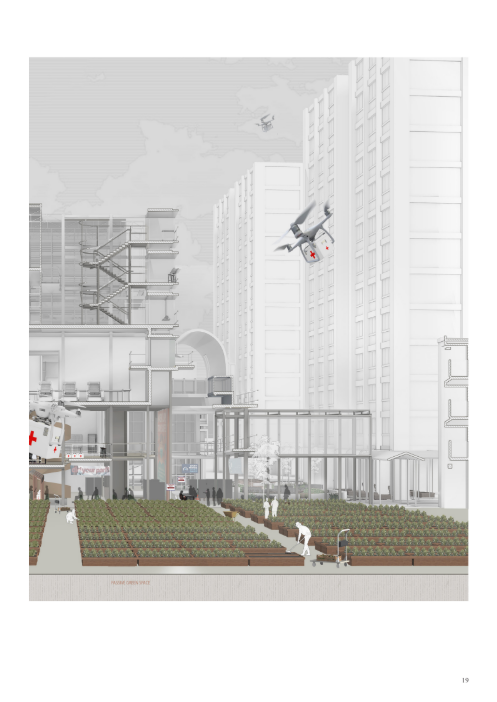
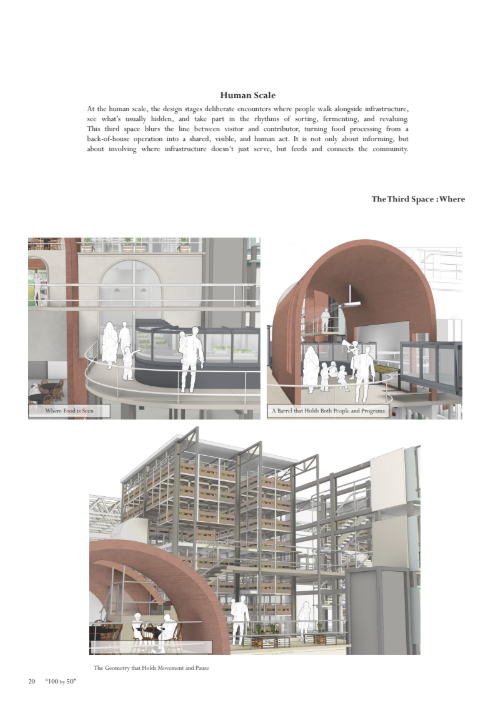
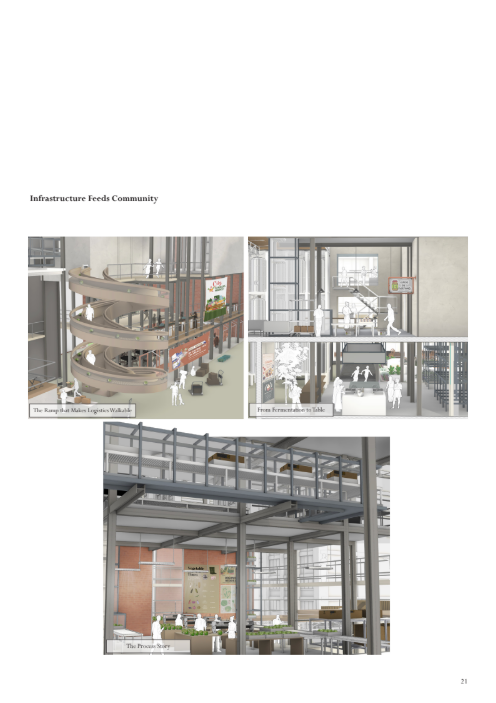
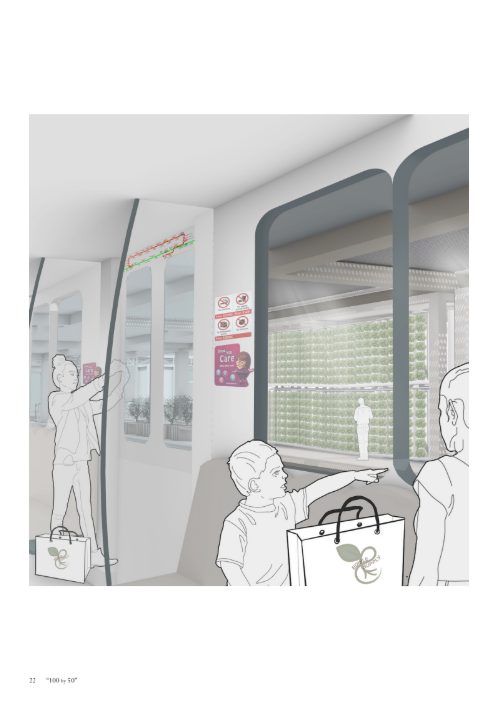
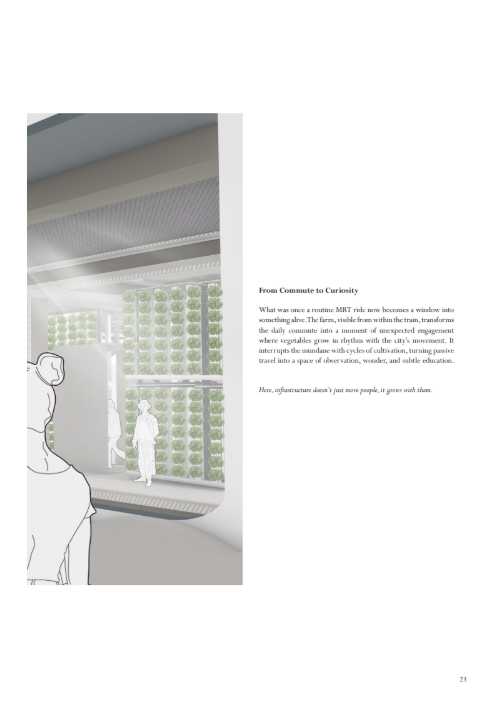
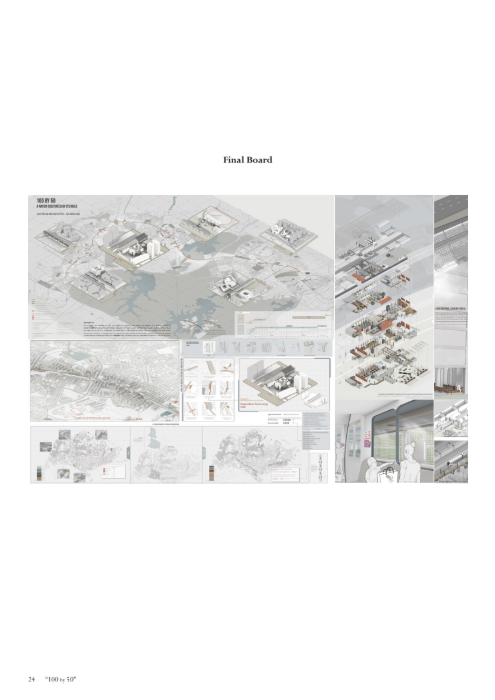
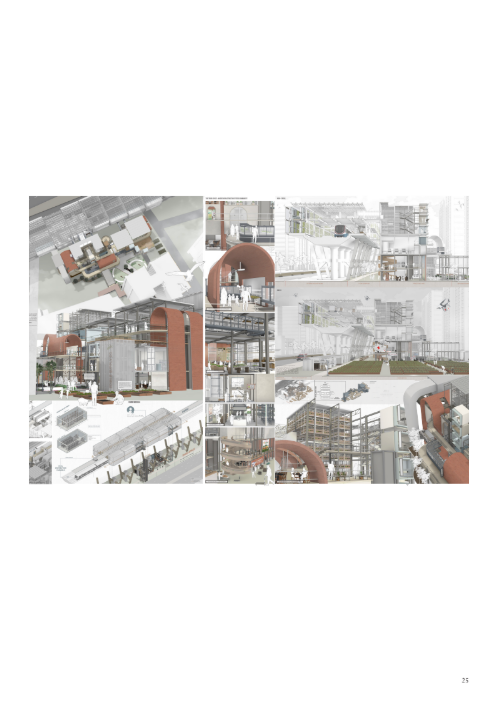
新加坡因其全球連通性和迅速城市化而備受讚譽,但其 90% 以上的糧食依賴進口,使其糧食安全面臨地緣政治動盪、氣候變遷以及全球供應鏈中斷的風險。本研究重新構想新加坡的農業版圖,不再將其視為邊緣議題,而是視為塑造國家物理環境與社會結構的關鍵力量。其核心理念是「可變性」——一種能在危機與非危機情境中靈活轉變規模與焦點的動態城市農業系統。
本論文提出一條實現到 2050 年百分之百自給蔬菜生產的路線圖,呼籲徹底重塑城市建築思維,將糧食安全無縫地融入城市建成環境的每一個層面,使其成為城市基礎建設的有機組成部分。在一個糧食不安全日益成為地緣政治風險映射的世界中,本論文提出這樣一個主張:真正的國家安全,根植於腳下的土壤——即一個國家從內部養活自己人民的能力。
–
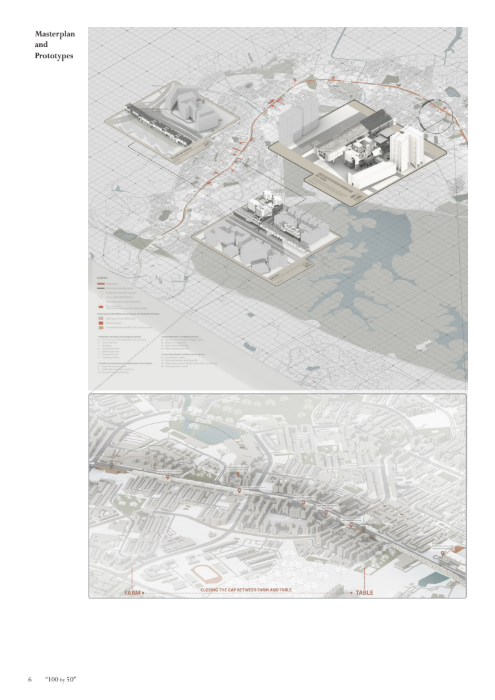
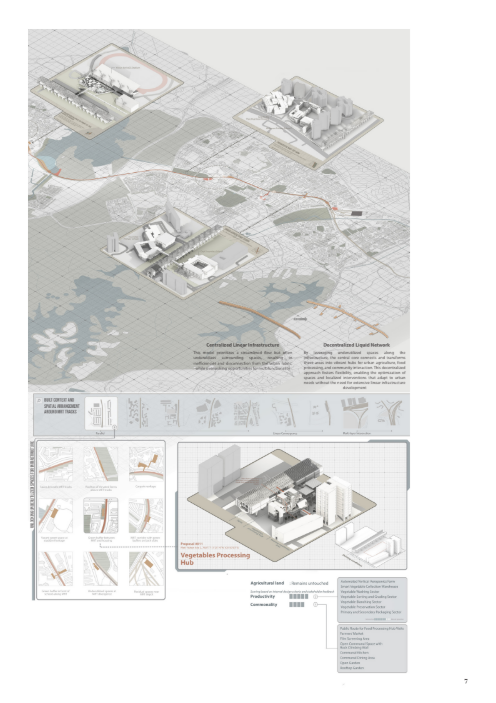
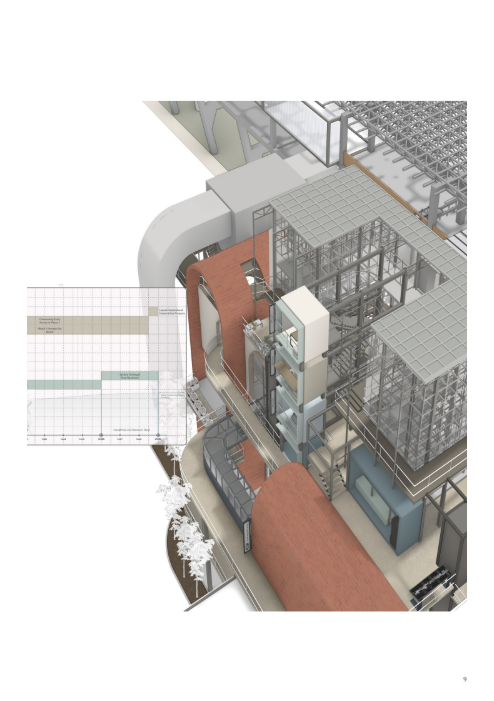
Singapore, celebratedfor its global connectivity and rapid urbanization, relies on imports for over 90% of its food, leaving its security vulnerable to geopolitical instability, climate change, and global supply chain disruptions. This research reimagines Singapore’s agricultural landscape, shifting it from a peripheral concern to a vital force that shapes both its physical environment and societal fabric. Central to this vision is transformability—dynamic urban farming systems designed to scale and shift focus fluidly between crisis and non-crisis scenarios.
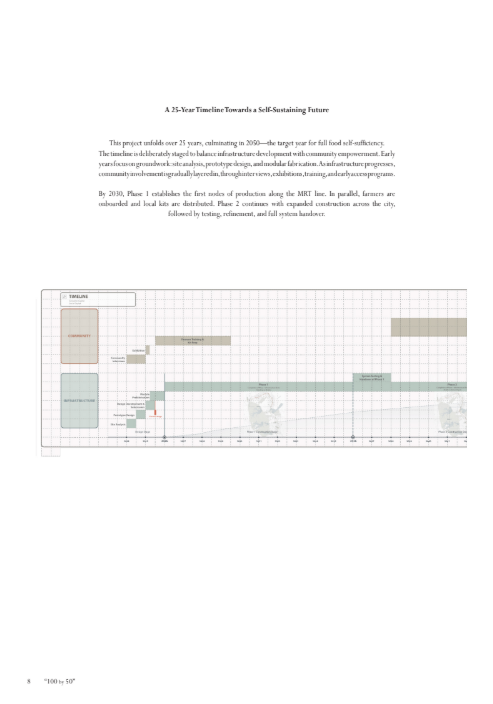
The thesis presents a roadmap for achieving 100% self-sustained vegetable production by 2050. It calls for a radical reimagining of urban architecture, where food security is seamlessly woven into every layer of the built environment as an integral part of the city’s infrastructure. In a world where food insecurity increasingly mirrors geopolitical risks, this thesis posits a claim: true national security is rooted in the soil beneath our feet—in a nation’s capacity to feed its people from within.